Editor Summary
The Digital Insurance Maturity Model is a 25-slide PowerPoint presentation by Affinity Consulting Partners that provides a stage-based digital maturity assessment for insurance firms organized across 7 architecture components/layers.
Read moreIncludes a Digital Maturity Assessment Framework template, roadmap template, metrics dashboard, best-practices guide, customer engagement strategy framework, and workshop materials. Target users include insurance executives, digital strategy leaders, IT and operations teams, and business analysts. Used to assess digital readiness, identify gaps, and plan transformation initiatives; sold as a digital download on Flevy.
Use this deck when an insurer must evaluate digital readiness and convert that assessment into prioritized transformation plans—typical triggers include strategic planning, technology investment decisions, and culture- or capability-building workshops.
Insurance executives setting transformation goals and prioritizing investments across product, distribution, and operations during strategy sessions.
Digital strategy leaders benchmarking current capabilities and mapping gaps to target states using a stage-based framework.
IT and operations teams designing and sequencing architecture changes, such as cloud, AI, and analytics implementation.
Business analysts measuring underwriting and claims process improvements and defining KPIs.
The stage-based assessment across 7 architecture layers, plus a roadmap and metrics focus, reflects the structured, stage-and-metrics-driven approach used at McKinsey, Bain, and BCG.
1. The strategic necessity facing Insurers in embracing digital
2. The major technology and architectural components needed to be in place to be truly digital
3. Exploration of stages of excellence for insurers against each of these seven components, what lagging and leading plays are doing in each of these domains in order to build the capabilities needed for a digital insurance business
The deck provides a frame for these considerations in a clear and concise manner that can easily be used with clients to determine where they are today and where they need to get to in order to bring their digital strategy to life.
As each of the seven layers on the architecture are explored, the components that make these layers up are explained and a spectrum of best practice is provided for each in turn.
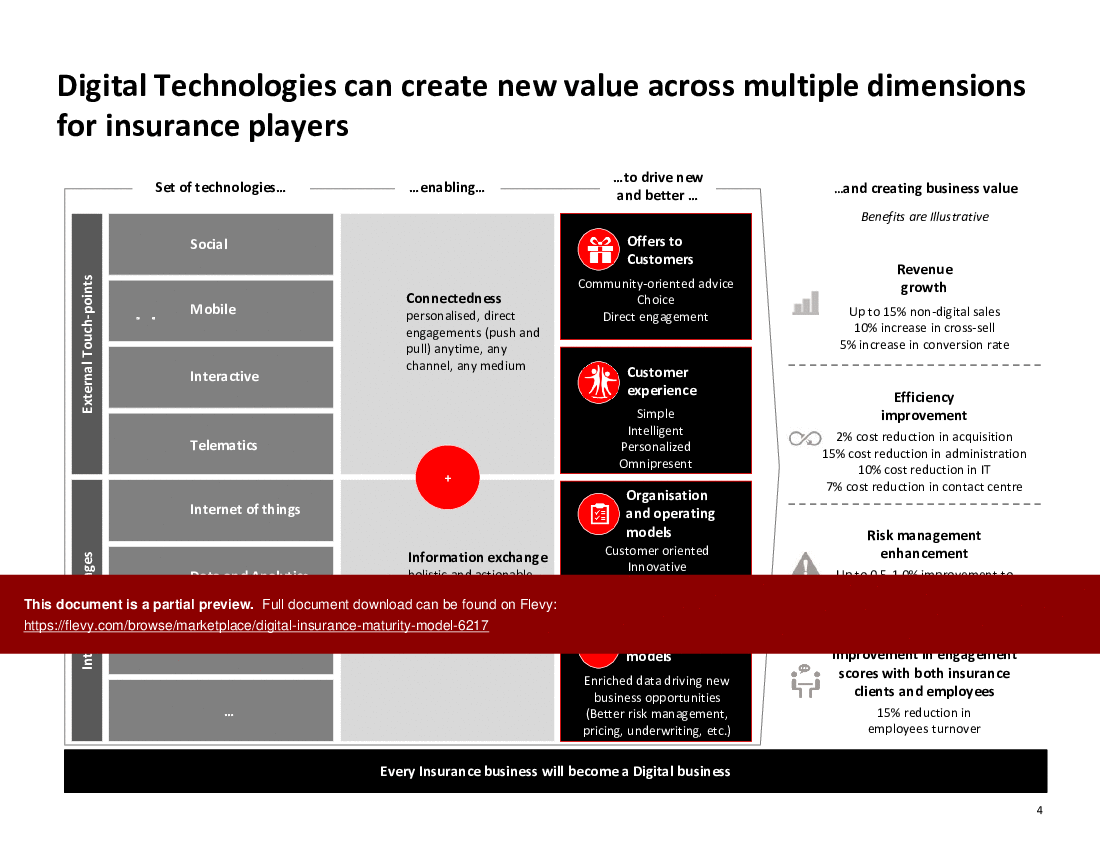
The PPT delves into how digital technologies can drive new value for insurance players by enhancing connectedness, information exchange, and operational models. It outlines the benefits of leveraging technologies like social, mobile, telematics, and IoT to improve offers to customers, customer experience, and organizational efficiency. The deck also highlights the potential for revenue growth, efficiency improvements, and risk management enhancements.
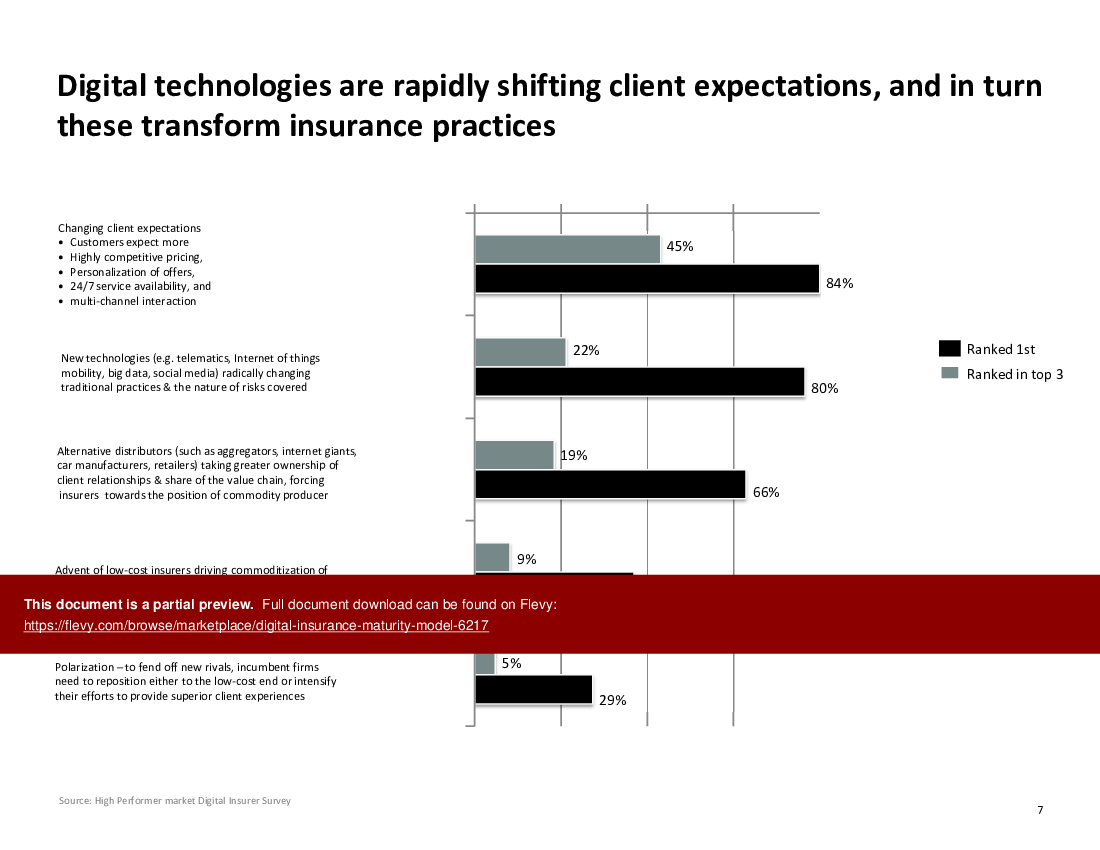
Digital technologies are reshaping client expectations and insurance practices. The document discusses the impact of changing client expectations, new technologies, and alternative distributors on the insurance landscape. It emphasizes the need for insurers to adopt a fluid and agile approach to architecture development to meet diverse business needs. The deck provides a comprehensive framework for assessing digital maturity across various components, including ecosystem, data and analytics, and security.
Got a question about the product? Email us at support@flevy.com or ask the author directly by using the "Ask the Author a Question" form. If you cannot view the preview above this document description, go here to view the large preview instead.
MARCUS OVERVIEW
This synopsis was written by Marcus [?] based on the analysis of the full 25-slide presentation.
Executive Summary
The Digital Insurance Maturity Model presentation provides a structured framework for assessing the digital readiness of insurance firms. This consulting-grade template, akin to McKinsey, Bain, or BCG-quality, outlines clear stages of digital maturity, emphasizing the integration of advanced technologies such as AI, cloud computing, and data analytics. Buyers will gain insights into how to evaluate their current digital capabilities, identify gaps, and develop actionable strategies to enhance their digital transformation efforts. This framework is essential for executives aiming to navigate the evolving insurance landscape and meet changing client expectations.
Who This Is For and When to Use
• Insurance executives seeking to drive digital transformation within their organizations
• Digital strategy leaders responsible for assessing and enhancing digital capabilities
• IT and operations teams tasked with implementing new technologies and processes
• Business analysts focused on evaluating current digital maturity and identifying improvement areas
Best-fit moments to use this deck:
• During strategic planning sessions to assess digital readiness and set transformation goals
• When evaluating technology investments and their alignment with business objectives
• In workshops aimed at fostering a digital-first culture across the organization
Learning Objectives
• Define the stages of digital maturity specific to the insurance sector
• Identify key digital capabilities and their impact on business performance
• Develop a roadmap for enhancing digital readiness and operational efficiency
• Establish metrics for measuring digital transformation success
• Analyze the role of emerging technologies in reshaping insurance business models
• Create strategies for improving customer engagement through digital channels
Table of Contents
• Digital Insurance Overview (page 2)
• Demand and Supply Background (page 3)
• Digital Capabilities and Architecture (page 10)
• Digital Maturity Assessment Framework (stages of excellence) (page 18)
Primary Topics Covered
• Digital Transformation - The shift from traditional operations to a digitally-driven business model that enhances customer engagement and operational efficiency.
• Digital Maturity Assessment Framework - A structured approach to evaluate the current state of digital capabilities and identify areas for improvement across various dimensions.
• Client Expectations - Insights into how digital technologies are reshaping customer demands and expectations in the insurance industry.
• Legacy Systems - Challenges posed by outdated systems that inhibit effective digital transformation and data utilization.
• Emerging Technologies - The role of AI, cloud computing, and data analytics in driving innovation and efficiency in insurance operations.
• Operational Efficiency - Strategies for leveraging digital tools to streamline processes and reduce costs while enhancing service delivery.
Deliverables, Templates, and Tools
• Digital Maturity Assessment Framework template for evaluating current digital capabilities
• Roadmap template for planning digital transformation initiatives
• Metrics dashboard for tracking progress in digital readiness
• Best practices guide for implementing emerging technologies in insurance operations
• Customer engagement strategy framework focused on digital channels
• Workshop materials for fostering a digital-first mindset within teams
Slide Highlights
• Overview of the Digital Maturity Assessment Framework, illustrating stages of excellence
• Insights on the impact of digital transformation on client expectations and operational practices
• Analysis of the barriers to digital strategy realization, emphasizing legacy systems
• Visual representation of the architectural layers necessary for a successful digital insurance strategy
• Key statistics from industry surveys highlighting the urgency of digital transformation in insurance
Potential Workshop Agenda
Digital Maturity Assessment Overview (60 minutes)
• Introduce the Digital Maturity Assessment Framework and its importance
• Discuss current trends and challenges in the insurance industry
• Review case studies of successful digital transformations
Strategic Planning Session (90 minutes)
• Break down the key components of the framework
• Identify current digital capabilities and gaps within the organization
• Develop actionable next steps for enhancing digital maturity
Customization Guidance
• Tailor the assessment framework to reflect specific organizational goals and challenges
• Adjust metrics and KPIs to align with the company’s strategic objectives
• Incorporate industry-specific examples and case studies to enhance relevance
Secondary Topics Covered
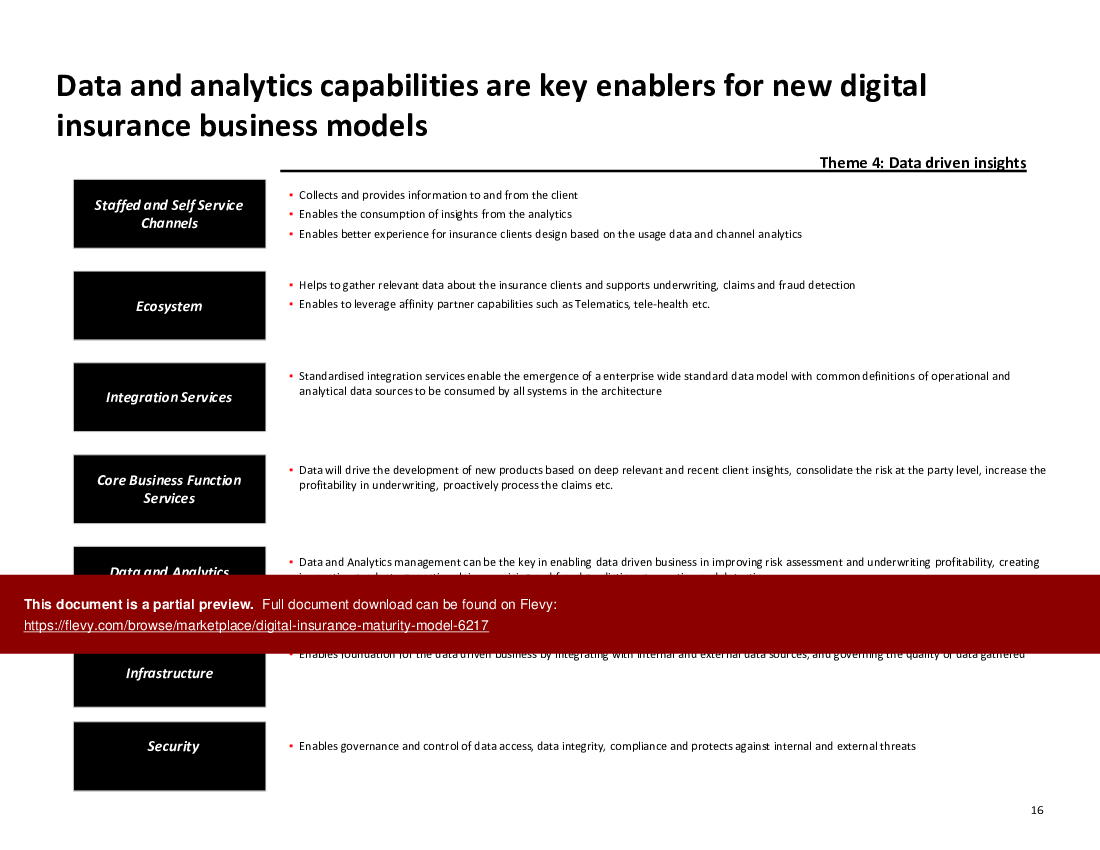
• The role of data analytics in improving underwriting and claims processes
• Strategies for enhancing customer experience through digital channels
• Best practices for integrating new technologies with existing systems
• Insights into competitive pressures from online service providers and aggregators
• Governance structures necessary for effective digital transformation
Topic FAQ
What are the stages of a digital maturity assessment for insurers?
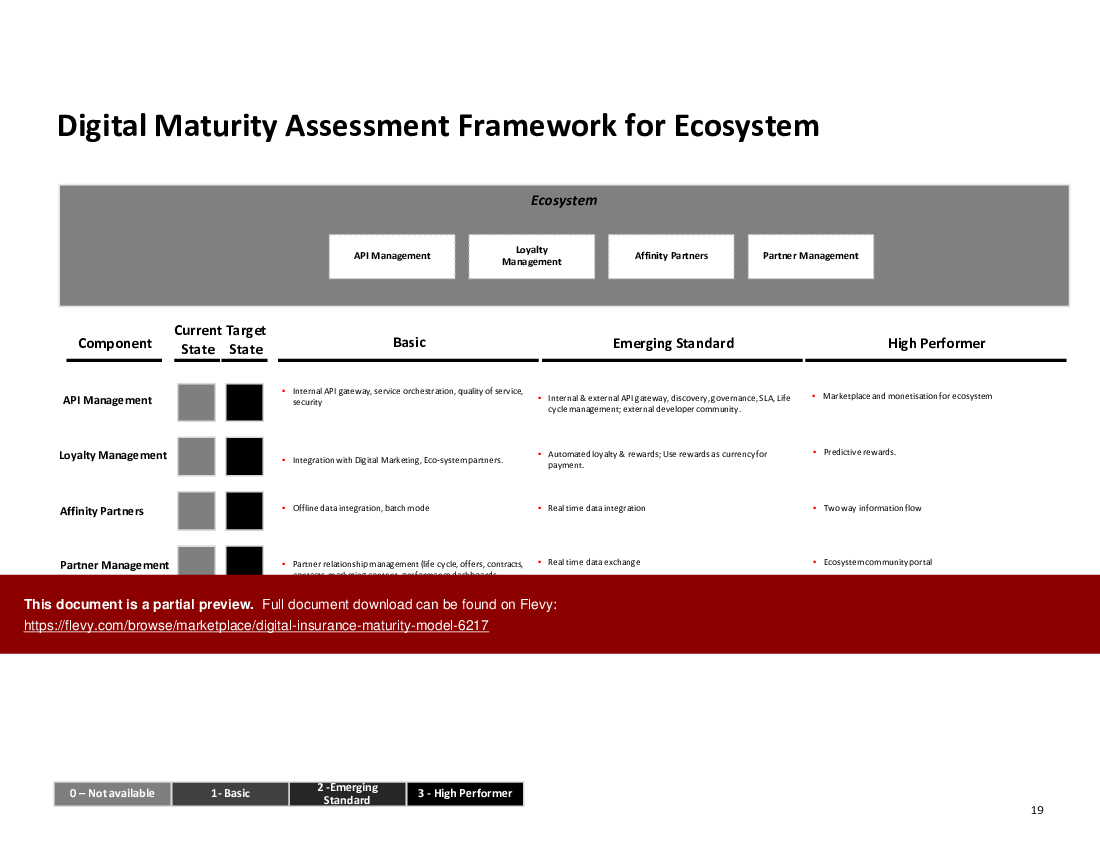
A digital maturity assessment maps a progression from lagging to leading practices across multiple domains. The model in this category typically defines stages of excellence for each architectural component, allowing firms to locate current state and target state; Flevy's Digital Insurance Maturity Model organizes this progression across 7 architecture components.
Which digital capabilities should insurers prioritize when planning transformation?
Industry guidance points to prioritizing customer engagement, operational efficiency, technology integration, and data analytics because these drive business outcomes and support new offerings. The Digital Insurance Maturity Model explicitly highlights customer engagement, operational efficiency, technology integration, and data analytics as key components.
How do legacy systems affect an insurer’s ability to go digital?
Legacy systems commonly inhibit data flow and system integration, creating bottlenecks for analytics, automation, and customer-facing initiatives. These constraints make it harder to adopt cloud, AI, and real-time analytics and are identified in the model as a primary barrier affecting integration and data utilization.
What should I look for in an insurance digital maturity toolkit before buying?
Buyers should seek an assessment framework, actionable roadmap templates, a metrics/dashboard tool for tracking progress, best-practice guidance on technology and architecture, and workshop materials for stakeholder alignment. Flevy's Digital Insurance Maturity Model lists the Digital Maturity Assessment Framework template, roadmap template, and a metrics dashboard as included deliverables.
Are templates and dashboards valuable for a mid-sized insurer with limited internal resources?
Templates can accelerate assessment and planning by providing structured diagnostics, predefined KPIs, and a repeatable roadmap format, reducing internal design time. For constrained teams, packaged assets like a Roadmap template and a Metrics dashboard can shorten planning cycles and standardize tracking across initiatives.
How should an insurer measure success after launching digital initiatives?
Success is typically measured using KPIs tied to customer engagement, operational efficiency, and technology adoption—examples include digital channel penetration, process cycle time, and platform uptime. The Digital Insurance Maturity Model recommends establishing metrics and KPIs related to customer engagement, operational efficiency, and technology adoption.
How can I structure a workshop to assess and improve digital maturity?
A practical workshop agenda includes an overview of the maturity framework, discussion of industry trends and barriers, case reviews, capability gap identification, and roadmap development. The product’s suggested agenda includes a 60-minute assessment overview and a 90-minute strategic planning session for developing next steps and actions.
Which emerging technologies are most relevant to digital insurance transformation?
The literature emphasizes AI, cloud computing, and data analytics for enabling automation and insights, alongside social, mobile, telematics, and IoT for customer engagement and connected products. The model specifically calls out AI, cloud computing, and data analytics as focal technologies for insurers.
Document FAQ
These are questions addressed within this presentation.
What is the Digital Maturity Assessment Framework?
The framework is a structured approach for evaluating the digital readiness of insurance firms, identifying strengths and weaknesses across various dimensions of digital capabilities.
How can this framework help my organization?
It provides a clear roadmap for enhancing digital maturity, enabling firms to align their strategies with evolving client expectations and industry trends.
What are the key components of digital maturity?
Key components include customer engagement, operational efficiency, technology integration, and data analytics capabilities.
How do legacy systems impact digital transformation?
Legacy systems can inhibit data flow and integration, making it challenging for organizations to adopt new technologies and meet client demands effectively.
What technologies should we focus on for digital transformation?
Focus on AI, cloud computing, data analytics, and customer engagement platforms to drive innovation and efficiency.
How can we measure the success of our digital transformation efforts?
Establish clear metrics and KPIs related to customer engagement, operational efficiency, and technology adoption to track progress.
What challenges might we face during digital transformation?
Common challenges include resistance to change, lack of investment, and the complexity of integrating new technologies with existing systems.
How can we foster a digital-first culture within our organization?
Encourage collaboration, provide training on new technologies, and promote a mindset focused on innovation and customer-centricity.
Glossary
• Digital Transformation - The process of integrating digital technologies into all areas of a business, fundamentally changing how it operates and delivers value to customers.
• Digital Maturity - The level of an organization’s digital capabilities and its ability to leverage technology for business outcomes.
• Legacy Systems - Outdated computer systems or applications that may hinder an organization’s ability to adopt new technologies.
• Customer Engagement - The interaction between a company and its customers, aimed at fostering loyalty and satisfaction.
• Data Analytics - The process of examining data sets to draw conclusions about the information they contain, often used for decision-making.
• Operational Efficiency - The ability of an organization to deliver products or services in the most cost-effective manner without compromising quality.
• AI (Artificial Intelligence) - Technology that simulates human intelligence processes, such as learning and problem-solving.
• Cloud Computing - The delivery of computing services over the internet, allowing for flexible resources and faster innovation.
• Customer Experience - The overall perception of a customer’s interactions with a brand, influenced by various touchpoints.
• Ecosystem - A network of interconnected entities, including partners and technology providers, that collaborate to deliver value.
• Omni-channel - A multi-channel approach to sales and customer service that provides a seamless experience across all platforms.
• Business Process Management (BPM) - A discipline that involves the modeling, analysis, and optimization of business processes.
• Telematics - The integration of telecommunications and monitoring systems, often used in vehicles to collect data for insurance purposes.
• Fraud Detection - The process of identifying and preventing fraudulent activities within insurance claims and underwriting.
• API (Application Programming Interface) - A set of protocols for building and interacting with software applications, enabling integration between systems.
• Digital Marketing - The promotion of products or services using digital channels to reach consumers effectively.
• Real-Time Analytics - The use of data and analytics to provide immediate insights and responses to business operations.
• Customer Data Management - The process of collecting, analyzing, and utilizing customer data to enhance engagement and service delivery.
• Risk Management - The identification, assessment, and prioritization of risks followed by coordinated efforts to minimize or control their impact.
• Personalization - Tailoring products, services, and communications to meet the specific needs and preferences of individual customers.
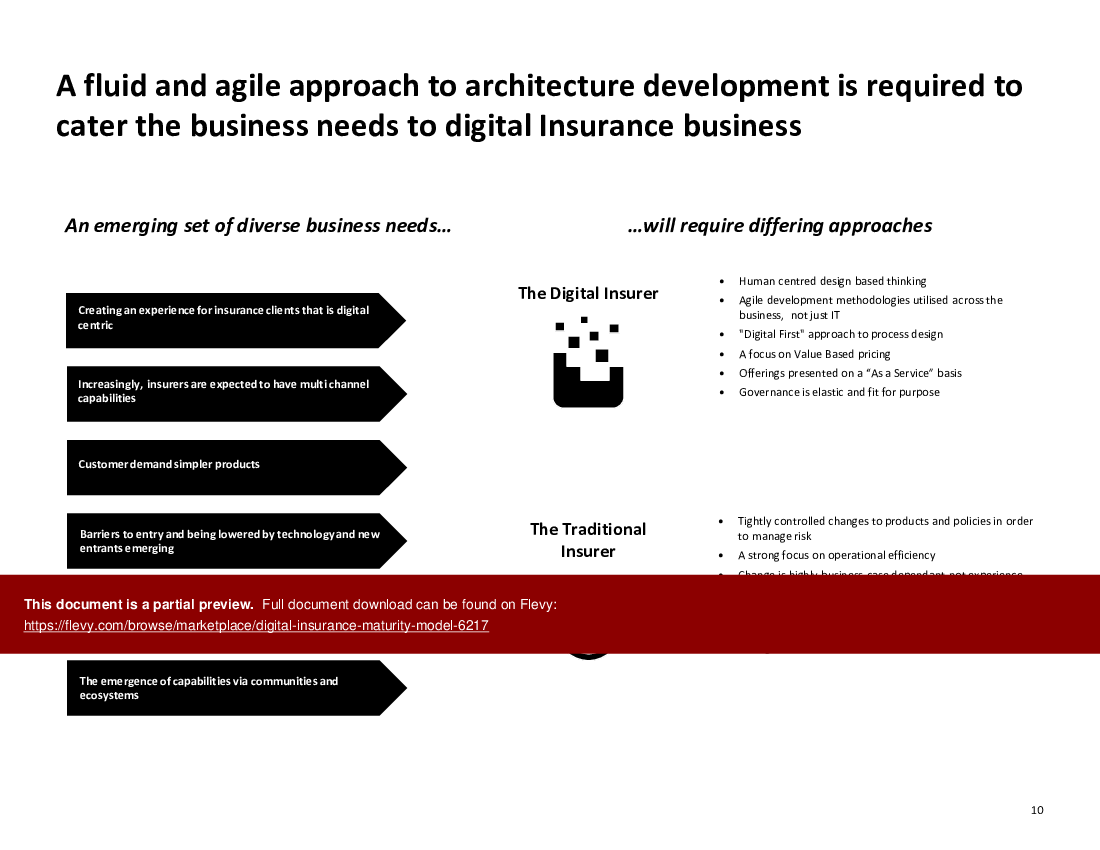
This PPT slide analyzes the evolving needs in the digital insurance sector, contrasting digital insurers with traditional insurers. Key business needs include a digital-centric client experience, multi-channel capabilities, and simpler products. Technological advancements lower barriers to entry, facilitating rapid digital innovation that reshapes product offerings and operational methods. The rise of capabilities through communities and ecosystems indicates a shift towards collaboration. Digital insurers employ a human-centered design and agile methodologies across the business, emphasizing a "Digital First" strategy and value-based pricing on an "As a Service" basis, with elastic governance. In contrast, traditional insurers maintain tightly controlled product changes, focusing on operational efficiency, repeatable delivery processes, and compliance, reflecting a cautious risk management approach.
Digital technologies are reshaping client expectations in the insurance sector across 4 key areas. Clients now demand competitive pricing, personalized offers, 24/7 service availability, and multi-channel interactions, necessitating insurers to adapt their service models. Innovations like telematics, the Internet of Things, and social media are redefining risks and traditional practices, prompting firms to invest in technology. The rise of alternative distributors, such as internet giants and car manufacturers, challenges traditional insurers to rethink their roles in the value chain, risking relegation to commodity producers without innovation. Additionally, the emergence of low-cost insurers drives market polarization, compelling established firms to either reposition or enhance client experiences significantly. The accompanying bar chart quantifies critical factors, highlighting the urgency for insurers to adapt or risk losing market share.
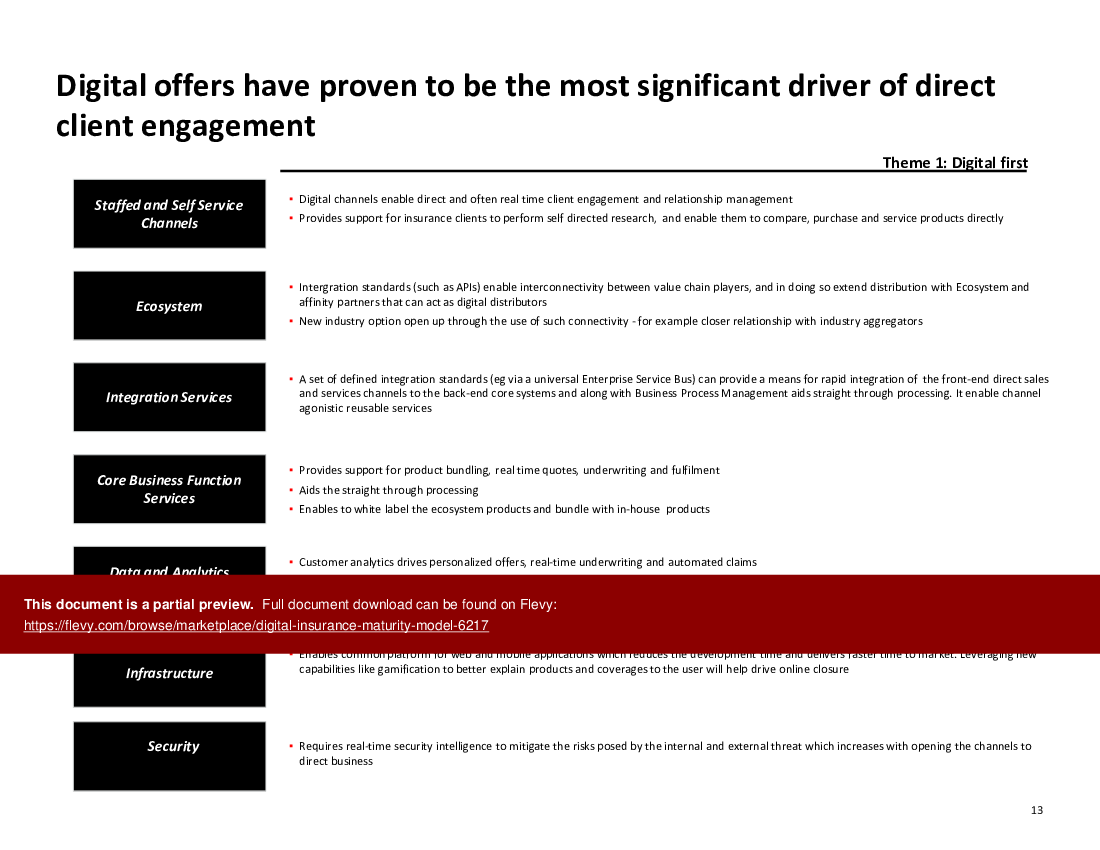
Digital offers enhance client engagement in the insurance sector through key components. "Staffed and Self Service Channels" enable direct client interactions, allowing clients to research and compare products for informed purchasing decisions. The "Ecosystem" segment highlights integration standards, such as APIs, that foster connectivity among value chain players, enhancing distribution channels and collaboration opportunities. "Integration Services" emphasize the necessity of defined standards for efficient front-end and back-end system connections. "Core Business Function Services" support essential functions like product bundling and real-time underwriting, crucial for adapting to market demands. "Data and Analytics Management" underscores customer analytics for personalizing offers and automating claims processes, leading to tailored client interactions. Finally, "Infrastructure" discusses the need for a unified platform supporting web and mobile applications, speeding up development and enhancing user experience through features like gamification.
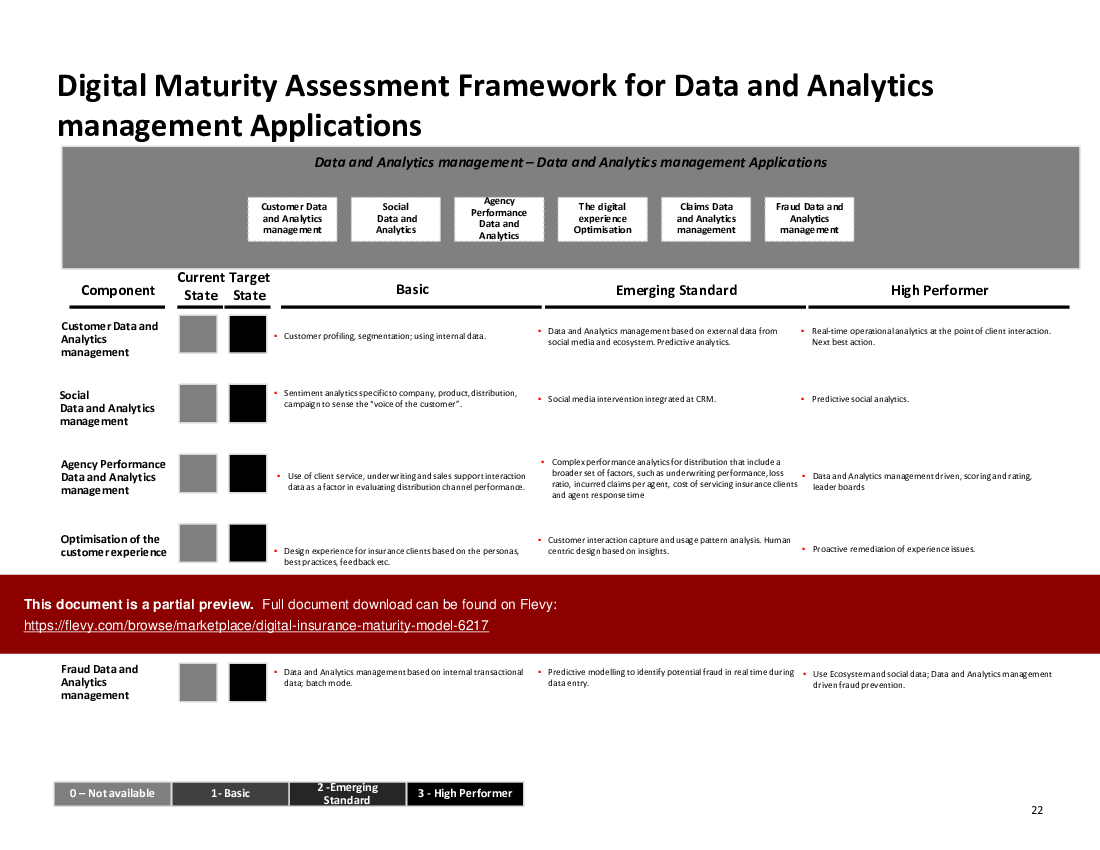
This PPT slide presents a framework for assessing digital maturity in data and analytics management within the insurance sector, categorizing components into 4 maturity levels: Basic, Emerging Standard, and High Performer. Key components include Customer Data and Analytics Management, Social Data and Analytics Management, Agency Performance Data and Analytics Management, Optimization of the Customer Experience, Claims Data and Analytics Management, and Fraud Data and Analytics Management. For instance, Customer Data and Analytics Management evolves from basic customer profiling using internal data to high performers utilizing real-time operational analytics. Similarly, Social Data and Analytics Management progresses from sentiment analysis to predictive social analytics. The framework emphasizes integrating diverse data sources and analytics capabilities to enhance decision-making and customer experiences, serving as a diagnostic tool for benchmarking data and analytics capabilities against industry standards.
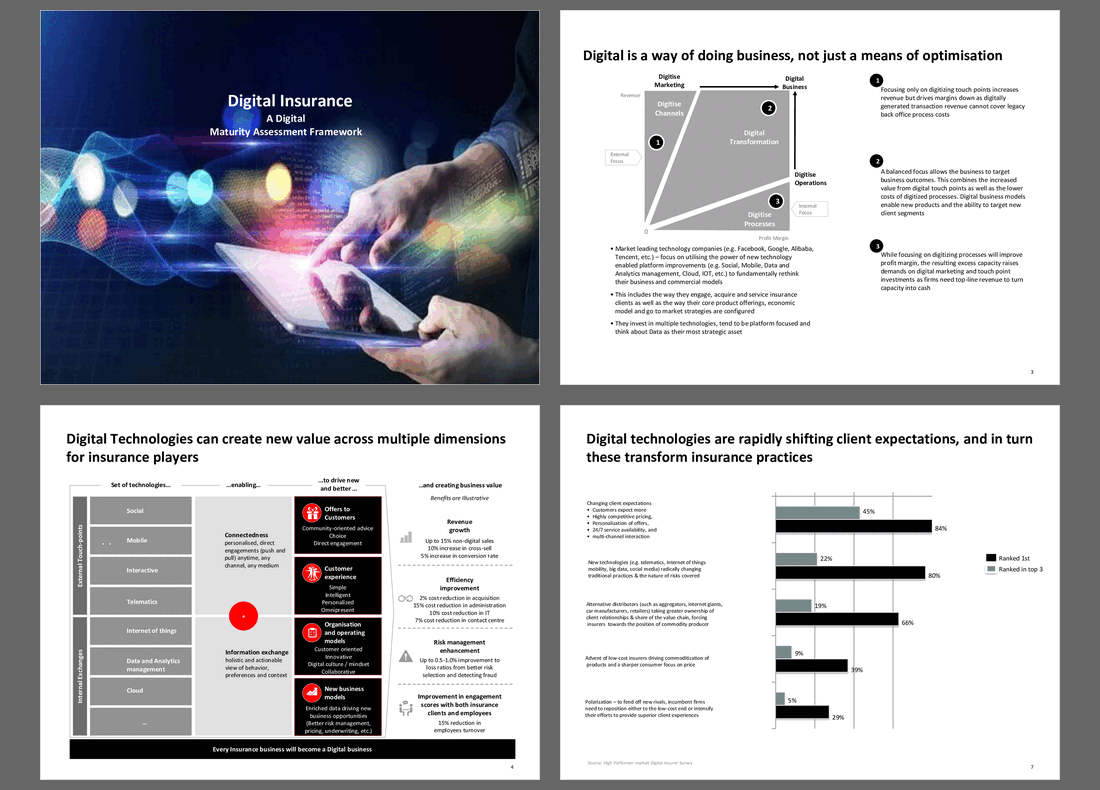
This PPT slide presents a framework for digital transformation in the insurance industry, emphasizing that digital is a fundamental business approach rather than just a tool for optimization. It categorizes digital engagement into 3 areas: Digitize Channels, Digitize Operations, and Digitize Processes, each impacting revenue and profit margins. Focusing solely on digitizing touchpoints can increase revenue, but may harm profit margins due to legacy costs. A balanced focus on external and internal processes allows businesses to target outcomes effectively, leveraging digital touchpoints while minimizing costs. Digitizing processes can enhance profit margins, but requires strategic alignment between digital investments and revenue generation. Businesses must rethink their digital strategies to ensure comprehensive transformation of their business models.
Digital technologies create new value for insurance companies through enhanced customer engagement and operational efficiency. Key technologies include social media, mobile platforms, interactive tools, telematics, the Internet of Things (IoT), data analytics, and cloud services. These technologies enable personalized interactions across multiple channels, driving revenue growth, efficiency improvements, enhanced risk management, and better engagement scores. For example, leveraging digital capabilities can lead to increased revenue from non-digital sales and reduced acquisition and administrative costs. A customer-oriented approach and a digital culture are essential for adopting new business models, which can unlock innovative opportunities and improve risk management practices.
Source: Best Practices in Digital Transformation, Insurance, Digital Maturity PowerPoint Slides: Digital Insurance Maturity Model PowerPoint (PPTX) Presentation Slide Deck, Affinity Consulting Partners
The Affinity Consulting Partnership is a global powerhouse of experienced consultants, specializing in technology and digital-driven change.
Our team is comprised of individuals across the globe who have extensive expertise and a proven track record in guiding large corporations across the globe through complex business transformations. Our partners were all at some stage senior consulting
... [read more] professionals at tier 1 global consulting firms over half our staff have been equity partners in the past at these firms.
With a combined experience of over 120 years, our partners bring a wealth of knowledge and insights to the table. Each member of our team has a distinguished background, having served as a top-level executive and trusted advisor to the C-suite of major corporations. Our partners have honed their skills and expertise through years of hands-on experience, leading successful consulting engagements across a wide range of industries, including finance, healthcare, retail, manufacturing, and more.
Our partners have a keen eye for identifying emerging trends and disruptions in the business landscape and are adept at developing innovative strategies to help our clients stay ahead of the curve.

As a team, we are dedicated to driving meaningful results for our clients, helping them navigate the complexities of technology and digital-driven change, and unlocking new opportunities for growth and success. Our partners are trusted advisors and thought leaders in the industry, and we are committed to providing exceptional service and creating lasting partnerships with our clients.

Since 2012, we have provided business templates to over 10,000 businesses and organizations of all sizes, from startups and small businesses to the Fortune 100, in over 130 countries.
"[Flevy] produces some great work that has been/continues to be of immense help not only to myself, but as I seek to provide professional services to my clients, it gives me a large "tool box" of resources that are critical to provide them with the quality of service and outcomes they are expecting."
– Royston Knowles, Executive with 50+ Years of Board Level Experience
"If you are looking for great resources to save time with your business presentations, Flevy is truly a value-added resource. Flevy has done all the work for you and we will continue to utilize Flevy as a source to extract up-to-date information and data for our virtual and onsite presentations!"
– Debbi Saffo, President at The NiKhar Group
"As a small business owner, the resource material available from FlevyPro has proven to be invaluable. The ability to search for material on demand based our project events and client requirements was great for me and proved very beneficial to my clients. Importantly, being able to easily edit and tailor
the material for specific purposes helped us to make presentations, knowledge sharing, and toolkit development, which formed part of the overall program collateral. While FlevyPro contains resource material that any consultancy, project or delivery firm must have, it is an essential part of a small firm or independent consultant's toolbox.
"
– Michael Duff, Managing Director at Change Strategy (UK)
"I am extremely grateful for the proactiveness and eagerness to help and I would gladly recommend the Flevy team if you are looking for data and toolkits to help you work through business solutions."
– Trevor Booth, Partner, Fast Forward Consulting
"As a consultant requiring up to date and professional material that will be of value and use to my clients, I find Flevy a very reliable resource.
The variety and quality of material available through Flevy offers a very useful and commanding source for information. Using Flevy saves me time, enhances my expertise and ends up being a good decision."
– Dennis Gershowitz, Principal at DG Associates
"I have found Flevy to be an amazing resource and library of useful presentations for lean sigma, change management and so many other topics. This has reduced the time I need to spend on preparing for my performance consultation. The library is easily accessible and updates are regularly provided. A wealth of great information."
– Cynthia Howard RN, PhD, Executive Coach at Ei Leadership
"I like your product. I'm frequently designing PowerPoint presentations for my company and your product has given me so many great ideas on the use of charts, layouts, tools, and frameworks. I really think the templates are a valuable asset to the job."
– Roberto Fuentes Martinez, Senior Executive Director at Technology Transformation Advisory
"I have used FlevyPro for several business applications. It is a great complement to working with expensive consultants. The quality and effectiveness of the tools are of the highest standards."
– Moritz Bernhoerster, Global Sourcing Director at Fortune 500
Save with Bundles
This document is available as part of the following discounted bundle(s):
Download our FREE Digital Transformation Templates
Download our free compilation of 50+ Digital Transformation slides and templates. DX concepts covered include Digital Leadership, Digital Maturity, Digital Value Chain, Customer Experience, Customer Journey, RPA, etc.








